
The 2026 Pivot: From AI Copywriter to AI Workflow Architect
Executive Thesis
The AI copywriter of 2023 sold output. The AI Workflow Architect of 2026 sells throughput, governance, and economic leverage.
This is not semantic. It is the difference between charging for words and charging for systems that convert fragmented institutional knowledge into repeatable revenue assets. The market now rewards the operator who can design an end-to-end content supply chain — ingest source data, orchestrate multiple models, enforce brand guardrails, produce channel-specific assets, measure downstream performance, and retrain the workflow based on outcomes.
For CFOs, content is no longer a linear labor expense. It is becoming a semi-programmable operating system for demand generation, enablement, and expansion. For CTOs, the question is not whether large language models can write — they can — but whether the organization has architecture that makes those outputs reliable, auditable, and economically rational.
The Great Commoditization
When generative systems produce competent first drafts in seconds, charging per article or per word becomes indefensible. The market does not eliminate demand for writing — it compresses the margin on undifferentiated drafting.
The 2023 content team researched, briefed, drafted, edited, published, and reported — all manually. Revision cycles were opaque. Knowledge lived in Slack threads and individual heads. Attribution between content and pipeline was weak.
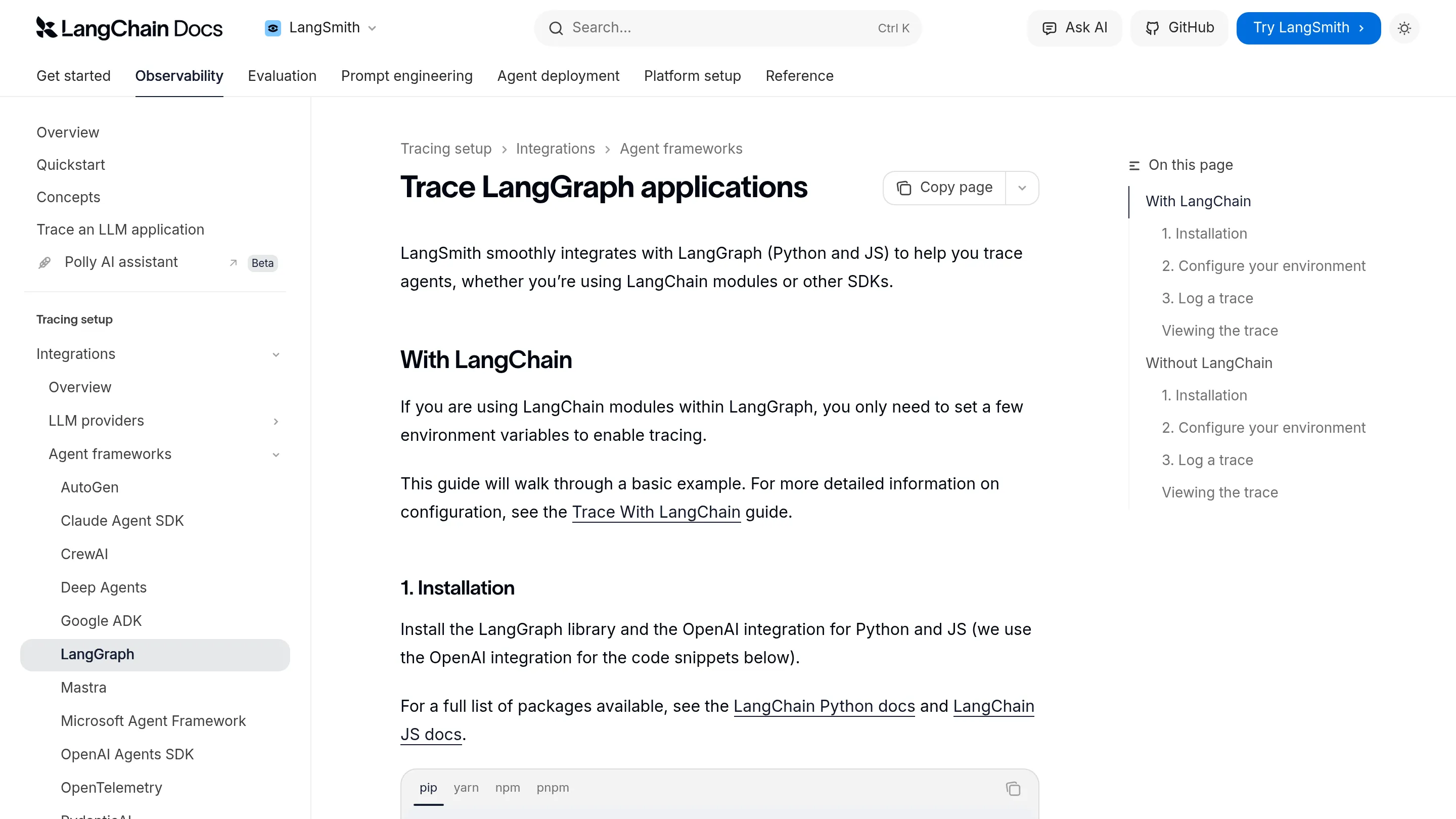
By 2026, buyers expect content operations to behave like software operations: modular, observable, versioned, and measurable. This is why observability layers for LLM applications have become strategic. LangSmith’s observability framework frames tracing as critical precisely because LLM applications are non-deterministic — debugging requires end-to-end visibility.
The unit being purchased is no longer “article production.” It is content system reliability and distribution efficiency.
For writers and strategists, this is not a death sentence — it is a skill repricing event. The low end of drafting is commoditized. The high end of orchestration, knowledge modeling, and workflow QA is appreciating.
Defining the AI Workflow Architect
An AI Workflow Architect designs the machinery around language generation. They do not ask a model for a blog post. They define what source material enters the system, how retrieval is constrained, which models handle which subtask, what brand and legal rules are enforced, where human review is mandatory, how outputs are distributed, and how performance data feeds back into future generations.
The correct mental model is not “prompt engineer.” It is content systems designer.
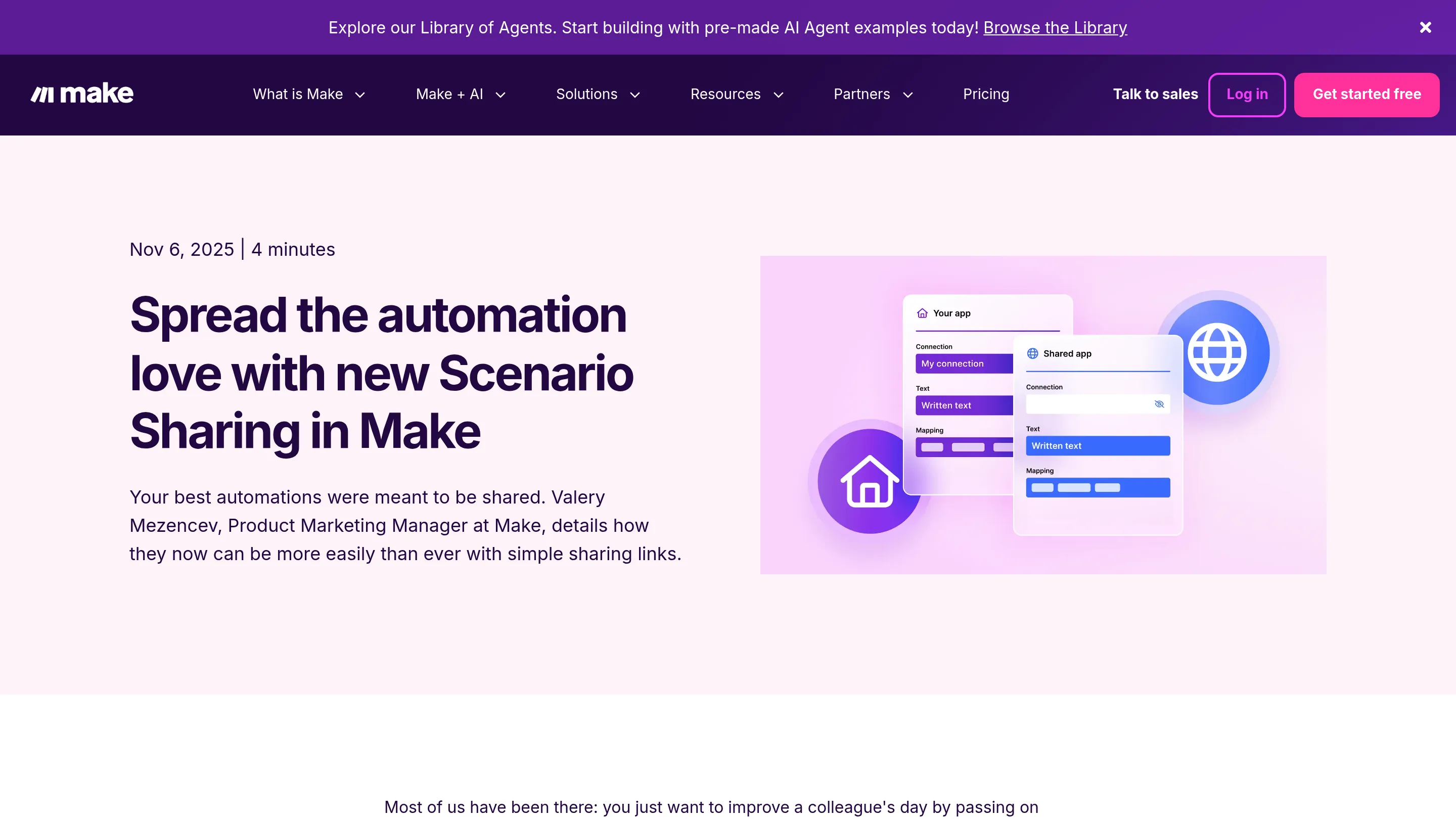
Make’s scenario sharing documentation illustrates how workflow logic itself has become a transferable business asset — reusable automations distributed via a single link rather than tribal knowledge locked in one builder’s account.
The 4-Layer Content Architecture
1. Input Data — Product docs, call transcripts, CRM notes, support tickets, SERP intelligence, existing content libraries. If this layer is weak, the entire stack hallucinates more and differentiates less.
2. LLM Orchestration — Multi-step execution: briefing, retrieval, drafting, claim extraction, citation insertion, persona adaptation, and variant testing. Handled through no-code automators, agent frameworks, or custom middleware.
3. Brand Guardrails — Vocabulary rules, legal restrictions, editorial style, approved claims, escalation logic. Without this, scaling output only scales inconsistency.
4. GEO Distribution — Formatting and distributing outputs for discoverability in both search engines and generative engines — blog, docs, sales collateral, email, and knowledge surfaces likely cited by AI assistants.
GEO: The New SEO for the Generative Era
Generative Engine Optimization adds a different target: being selected, summarized, and cited by AI systems like Perplexity and SearchGPT. This changes production briefs in five ways:

- Structure beats ornament. Explicit headings, scoped claims, tables, and evidence-linked assertions are ingested more efficiently by AI systems.
- Authoritative sourcing becomes product. Untraceable claims are less useful to answer engines that prioritize citation pathways.
- Information gain matters. Original synthesis, internal data, and quantified tradeoffs create cite-worthy surfaces that generic paraphrases cannot.
- Entity clarity is strategic. Product names, integrations, and use cases must be unambiguous to reduce entity confusion for retrieval systems.
- Freshness is volatile. GEO is a monitoring discipline — model behavior and citation preferences change continuously.
Semrush’s Content Toolkit already reflects this direction, positioning itself as a workflow for optimizing content not only for Google but also for AI search platforms.
Radical transparency: GEO citations remain unstable. Anyone promising deterministic placement inside answer engines is overselling. The better positioning is operational — improve the probability of being cited through structure, authority, and evidence density.
Economic Impact: Quantifying Content Automation ROI
| Metric | Manual Production | Architected AI Workflows |
|---|---|---|
| Cost basis | Human hours per asset | System design + marginal generation cost |
| Cycle time | 8–12 days per long-form asset | Hours for first-pass multi-format output |
| Reuse rate | Low | High — one source becomes many channel assets |
| Knowledge retention | Tribal | Codified in prompts, retrieval layers, workflow logic |
| QA visibility | Fragmented | Traceable and inspectable |
| Scalability | Headcount-bound | Process-bound |
The biggest ROI mistake is focusing only on labor substitution. If AI reduces drafting time by 60–80%, the real gain is redeploying expert labor into original research, message testing, sales alignment, and conversion analysis. This is where content LTV rises — assets become longer-lived because they are easier to refresh, decompose, and redeploy.
Ahrefs’ Top Pages report shows how operators can model content velocity and share-of-voice pressure for budget planning — critical input data for deciding where an automated pipeline should invest production resources.
Your 12-Month Roadmap to Architect Status
Months 1–3: Systems thinking. Map the content supply chain in your current role. Document intake, transformation, review, publishing, and reporting. Find where humans add value versus where they merely shuttle information between tools.
Months 3–6: Build one workflow. Turn a single input source — webinar transcripts, for example — into a package of outputs with brand rules, approval gates, and QA checklists. Use a visual automation layer so stakeholders can follow the logic.
Months 6–9: Add observability. Instrument your workflow with tracing and debugging tools. When outputs fail, know whether retrieval, prompt design, or source quality caused it. Build a proprietary knowledge layer instead of relying on generic prompts.
Months 9–12: Tie to revenue operations. Connect asset production to pipeline metrics — influenced demos, sales enablement usage, win-rate support, onboarding deflection. This is when your role stops looking like content and starts looking like business infrastructure.
Final Takeaway
Do not compete with the model on speed. Compete on workflow design, source quality, governance, instrumentation, and economic accountability.
The copywriter who remains a producer becomes cheaper. The copywriter who becomes an architect becomes harder to replace.